Tuesday, June 14, 2011

Prague : Breathless in Bohemia


There are some cities which are historic and there are some which are beautiful. However there are some which are more blessed than the others which are aesthetically pleasing as well as historic. Ones whose inert beauty does not fade even amidst the relentless tides of history. The Czech capital of Prague is one such city which combines the beauty for the eyes with the history for the mind. It is to this city that i travel on my voyage across Europe.

June 3, 2011, Friday

The Czech republic or formerly the Bohemian kingdom of Central Europe is one of the most picturesque countries of Europe. Nestled between Great Germany on the one side and the rest of Eastern Europe on the other, its location is both a boon as well as a bane. Although its location gives it some of the most beautiful landscapes in Europe it also sets it in the cross hairs of historic conflicts. Its great neighbor Germany coveted it so much so that it could not resist invading it during the world war and once the war was over the Eastern European bloc controlled by Russia sucked it into the cold war putting it behind the Iron Curtain.

As a child though my fascination for Prague was strangely enough due to a Sherlock Holmes story. Its one of the most famous Holmes stories called 'A Scandal in Bohemia' where the great sleuth takes up a case of a Count from Prague, its one of the few stories where the great British detective comes out of his British ambiance and deals with the Continent. The story and this exotic place called Bohemia stayed in my mind ever since and visiting it was one of those childhood fancies - the one that you always wish but you know you will never attain. However owing to my good fortune here i was actually making a visit to the place. Lucky me.

As my bus screeched into the Florec bus station the impending day made me very excited. Prague unlike Budapest is a small and compact city and i was able to reach the city center by foot .However there was a marked contrast between Prague and Budapest which i had visited the previous day. There was absolutely no sign of the communist period. No grey buildings, no statues, no nothing. The city seemed to be left unscarred from the five decade assault of communism. What hit the eye though was the beauty of the whole place. The narrow cobbled stoned streets wound into the historic center seamlessly merging with other smaller streets. The light from the waking sun seemed to illuminate the gorgeous buildings of the city. Even among the clamor of modernity the entire architecture of the city seemed to be immersed in a bygone era. I might well have been walking in 19th century Bohemia!

The city center loomed ahead indicated by the spire of the legendary Tyn Cathedral. But this was the case of the journey being more pleasant than the destination. My eyes were having a difficult time taking in all the spectacular sights around me, not only was the architecture so soothing but it was the myriad hues of color that the buildings were painted in that took my breath away. Shades of Yellow, pink, green and red colors adorned these wonderful buildings and the morning sunlight was bringing out their richness. These were no ordinary buildings, among them were municipal houses, banks and churches. Somehow this aesthetic image and the gory history of the city's past did not sit together in my mind.

As i continued my walk i saw a tower like black building which peaked through the colorful buildings around it. This was the famous 'Powder Tower'. It was called so because it was used to store gun powder during the middle ages. It is an important landmark in the city as the inner city starts from here. Beside it was a contrasting yellow colored building with a beautiful painting in the middle adorned by statues on either side. This was the Municipal house of Prague and was one of the great public spaces of the medieval city housing the offices of the city's administrators.

From the Powder tower starts the most famous street in Prague - the Celetna. Its name literally means 'the royal way' and as the name suggests was the historic route taken by the King on his way through the city center to his ultimate Castle destination atop the hill. This part of the city was called 'Stare Mesto' or the 'Old Town'. A few more steps from the Powder tower finally brought me to the great center of Prague - the Old town Square.


The Old Town Square was simply breath taking. I had been to a lot of great European cities and seen innumerable squares but this was just out of the world. Apart from its massive size the sheer beauty of the buildings around was mind blowing. One side of the square had the Iconic Tyn church with its 'rocket launcher' twin spires. Its lower half obscured by a trendy cafe filled with tourists. With its entrance obfuscated by the cafe the Twin towers of the church seemed to float in mid-air! Adjacent to the church is the city Opera with it lovely red tiled roof and delicately decorated exterior. The view gets better though on the opposite side which has the Town hall with a red facade and housing the world famous Astronomical clock. Adjoining the town hall is a wonderful green space with enterprising vendors selling barbeque.

The other two sides of the square too contains exquisite buildings with fine statuettes. One building though caught the eye. It was a canary yellow colored building which was formerly the fire department and quite apt to its utility it had a statue of a fire man as he is rescuing a girl and another which had a woman shouting for help. Talk about a building architecture befitting its utility! Adjacent to it was another remarkable building which was apparently a hotel which had statues of two squabbling couples on either side of its entrance. Apart from the wonderful buildings the square was scattered with many bars and Cafes.The people of Prague really do know their art i mused to myself.


The Center of the square was adorned with the statue of Jan Huss. A great Czech religious reformer who questioned the ways of the Catholic church a full hundred years before Martin Luther pinned the legendary note of protest on a German church door to start the reformation! Amidst his growing popularity the Catholic church did what it did best, snuffed it out by declaring him as a heretic and hunted down all his followers who together with Huss were brutally burnt at the stakes. Huss after his tragic end became a martyr and his followers and his philosophy was and still continues to be a veritable alternative to the Catholic church here in the Czech republic. His memorial in the middle depicts his final hours as he and his followers are shown embraced in fire with him still holding the Bible in his hand. What a great memorial to a great man.

If the square was a glittering crown , the jewel in the crown was the St.Nicholas church situated on one of the squares' corner adjacent to the town hall. The church was a superb example of high-baroque architecture with a beautifully crafted exterior and a magnificent dome. The inside of the church too was equally beautiful. Though not very big in size it was rich in its decoration. Statues of religious nature were crafted in white marble and Gold was added in small but strategic positions to bring a certain richness and accentuate the statues. What more it was a living church and also doubled up as a concert hall. In fact there was a Mozart concert that very evening!


Another must see church in the Old Town was the St.James' Church. Its a masterpiece of Baroque architecture and has one of the most elaborate interior designs i have ever witnessed. The exterior though was very interesting with a facade containing three baroque pieces, each in white with a tinge of gold. But the interior was the real deal as it contained artistically crafted chapels and numerous paintings and sculptures. The alter too was a sight to behold. It was designed to give the impression of a huge art piece held aloft by flying angels. Interestingly the interior was designed by an Italian artist and again goes to prove the line 'Italian for art'.


After the Old town it was time to go to the much newer part of the city - the Nove Mesto - the New Town. As Prague is a compact city one could get there on foot alone. Here there were more modern shops and malls , pizzerias and McDonalds, hotels and restaurants and all other trappings of a tourist hub. As with the old town , the new town was filled to the brim with people, it was like being in India all over again. A short walk got me to the second most important square in Prague called the Wenceslas Square. The square is named after the patron saint of Bohemia St. Wenceslas and is topped at the end of it by the enormous neoclassical styled Czech National Museum. It is a hotspot of the city for any kind of celebrations or protests. The square also had other significant buildings such as the Hotel Europa which with its yellow exterior was one of the most beautiful Hotels i have ever seen. Also present was a huge Bata showroom which is a quite special brand for Indians. The Bata footwear brand is ubiquitous in India and has been known for its quality footwear at affordable prices for decades. So much is its fame in India that most Indians think that its an Indian brand but infact its a Czech brand! How it came to occupy such a huge place in the Indian psyche is truly remarkable and a perfect case study in marketing in B-schools around the world.

The Wenceslas square played a very important role in Czech history or rather the Czechoslovak history.Czechoslovakia was a union of two desperate units - Czech and Slovakia - which were forged together after the end of the second world war when the Austro-Hungarian empire of the Hapsburgs finally collapsed. This hastily put together unity was under communist rule for almost half a century before the events arising from the fall of the Berlin wall eventually tore it apart. However the split was not as violent as that of other Eastern European countries. In fact it was at this very place that a peaceful revolution called the Velvet revolution resulted in the peaceful separation of Czechoslovakia into the Czech and Slovak republics. This is a lesson to the whole world on how to split a country in a civilized and peaceful manner. In a world filled with painful separations like pre-partition India and Yugoslavia, the events at Wenceslas square are a great lesson from history.


The eventful day finally came to and end after a leisurely stroll in Prague's New town. Though it had its share of wonderful buildings they were no match to the sights of the Old town. In fact not just the New town any city around the world would have had a tough time competing with the beauty that was the old town!

June 4, 2011, Saturday

It was the second day in Prague and the sun shone brightly in the sky and the cloudless sky made it a perfect day for traveling. It was a day meant for exploring the Castle district of Prague but however before that there was short excursion into the Legendary Town Hall.

The Town hall as i had mentioned previously stands on one of the sides of the Old town square. Its red exterior and pointed roof gives it a distinctive medieval look. Impressive as it is what stands today is just a fraction of the town hall. Before the second world war the Town hall was five times bigger and occupied the one entire side of the Old town square. However the war arrived and Prague became one of the many battlegrounds in main land Europe. However just before the war it was Prague that held out the last hope for peace. With Hitler at the peak of his popularity in the 30s he started on his mission of returning the 'German pride' that was battered by its surrender after the first world war. The reoccupation of the Rhineland was the first step on this road and the German speaking areas of Czechoslovakia called the Sudetenland were the next target. Hitler was adamant on his demand for Sudetenland and threatened a world war if he was not given it. With Europe and the world on the verge of a war the leaders of the world united headed by the British Prime minister Neville Chamberlain. Will the Czech gambit of paying off Hitler with Sudetenland stave off a world war? The whole world waited with bated breath. The British PM did what Britain was always famous for - trading off other people's property without their consent. Poor Czechoslovakia looked on haplessly as Britain and the other great powers handed over the Sudetenland to a smiling Hitler and Chamberlain proclaimed emphatically that he had achieved 'Peace in our time'. Little did he know that Hitler had other ideas, he was hellbent on a war and he got it when he found a silly pretext and invaded Poland and triggered the world war. Hence the Czech gambit did not work and the whole of Europe plunged into war and Prague was eventually occupied by Germany.


The Germans occupied Prague for the rest of the war and a million strong German army fought to retain it even as they stared defeat in the war. It was at this time that the Czech resistance fighters holed out inside the then enormous Town Hall but they were brutally killed when German tanks were brought onto the Old town square and the Town hall heavily bombarded to its present tiny size. Only the suicide of Hitler and the impending fall of Berlin alarmed the German soldiers to leave Prague even as the Soviets moved in. Just as everyone in Prague started to think of living 'happily ever after' the Soviets who came in as liberators became the occupiers and even when they left setup a puppet communist regime as part of their grand plan for eastern Europe. Thus the Czechs fell into another struggle with communism which lasted well over four decades. It was quite apt i thought that the Town hall was painted red considering its gory history.

Not everything about the Town hall is blood and gore. On one of its sides there is the world famous Astronomical clock which along with the time shows the seasons and star positions and such. It has been chiming for the last several hundred years. The most interesting thing about the clock is this very chiming. Every hour the bells are sounded by a pageant of the twelve apostles of Christ as each one comes out of a little window and hits the bell and disappears into another window only to let the next one do the same. This happens every hour on the hour! And not surprisingly its the most famous spectacle in Prague. As i made my way near the clock the sheer number of people ready with their cameras was overwhelming. And the show was as good as promised as the Twelve apostles came out on time and rang the bell. This can happen only in Europe i mused to myself!


Next i headed to the famous Castle district via the royal Celetna street. It was as if everyone in town was headed in that direction as i saw throngs of people going along with me. The narrow streets were almost choking with people . The road ended at the head of the famous Charles Bridge. Built by the Emperor Charles it connects the Old town to the Castle district. It is one of the great bridges of Europe and is modeled on Bernini's famous Bridge of Angels in Rome. Like the original it is covered by either sides by a row of Saints and Kings with each sculpture a real piece of art. Its also lined by famous artists painting and sketching away the people and landscapes around. The bridge too was crowded and was filled to the brim with people. The distant view of the Castle enticed the travelers who wanted to get there as quickly as possible.


After crossing the Charles bridge i was onto the winding steep streets of the Castle district. Like the old city it was littered with magnificent buildings of various colors. The brilliant views around drowned the tiredness of the steep climb. Within minutes i was at the foot of the Castle and a few more steps lead me to the Castle itself. The Castle of course is a Hapsburg legacy and like the castle in Budapest but even more beautiful had all the signs indicating it as one. All around too there were other great buildings with wonderful architecture. It was noon time when i reached and everybody seemed to be waiting for somebody. At first i thought it could be a celebrity but later realized that in fact i was in the middle of the change of guard. Soon a set of guards marched in and opened the gates and changed the guard and the set that was replaced marched out. Exactly how it happened during the times of the Hapsburgs!


At once i was inside the castle and was impressed with what i saw. Exquisite buildings with great statuettes and a fountain to boot in the middle. With all this Hapsburg setting around me i thought i was in Vienna already until i pinched myself to say that it was still a day away. Frankly if this is what the Hapsburgs did with their other cities i could not wait to see what they had done in their capital Vienna! Next i visited the St.Vitus church built in memory of the patron saint of Prague it was a gem of Gothic architecture. The insides were well crafted and decorated as it must be as it was the church used by the Hapsburgs for their royal ceremonies. One particular piece of art caught my attention though, a statue of St.Vitus circled by cherubic baby angels holding aloft the curtains for the Saint, and all of this in pure silver. Absolutely amazing!

Then i moved quickly to the Old royal palace which although not so specially decorated provided stunning views of the city from its balconies. The view of the city from here was one of the most beautiful views i have even seen. It looked like a picture postcard. The sun shining over a lovely city with orange roofs and spires. There was a great view of the Charles bridge too. The bridge filled with people, so much so that it seemed like no one was moving! Seeing the view of the city one could vouch for the fact why Prague is called the 'City of a 100 spires'. From this vantage point one could see the entire city sprinkled with scores of spires, some tall , some short but all of them wonderful to look at.

After going to a few other minor attractions inside the Castle compound it was time to go down to the city. The exit opened to a lovely vineyard and there were people who were relaxing on the side sipping wine as they took in the view of the city. The Vineyards accompanied me to the bottom of the Castle district and sooner than i could realize i had descended the hill and was on flat ground.

After winding through some more streets it was time to bid goodbye to this great city. It had been a great experience and more than the legs the eyes were sore after taking in so much of this beautiful city. As i bid good bye i was sure of one thing, Beauty had a new word and it was 'Prague'!

Saturday, June 11, 2011

Budapest : Behind the Iron Curtain


The cold war was the defining political discourse of much of the 20th century. It created friends , it created enemies, it created impending war and elusive peace. No part of the world exemplified the cold war and the tragedy it brought better than the countries of eastern Europe or as they are sometimes referred to as the lands beyond the "Iron Curtain". Budapest - the capital of Hungary -was one such city lodged behind this iron curtain and that is where my next stop was.

June 1, 2011,Wednesday

The Ferihegy airport in Budapest looked quite brand new with beautifully designed interiors containing the best global consumer brands. What a departure this was i thought to myself from the cold war era when anything like this would have been impossible to imagine. After spending quite a long time finding the exit i was finally out of the airport and on road to the city.

The view of the approaching city was a very novel one for me in Europe. The sophistication of the other western cities i had visited was replaced by a scene of ongoing change similar to India. After all this was a city trying to come into its own after six decades of communist rule. So one saw buildings and roads under construction and a general environment of flux. However the legacies of the communist era remained, not in the overt display of statues of communist leaders which had since been removed but in buildings and streets around the city. The buildings with their grey,solid exteriors looked like they distinctly belonged to the communist era. Modern glass covered buildings from the post-communist era with McDonald chains in them were sheepishly making an appearance next to them!

Budapest is basically two cities - Buda and Pest - split neatly by the Danube river. The Buda part residing on top of a hill across the Danube and the Pest part on the plain across it. I first made my way to the Buda part which was the historical capital. I got into a bus which was fairly crowded as it was the morning rush hour and reminded me of some of my rush-hour bus travels back in India. The bus passed through the streets of Pest and onto the legendary chain bridge that joins Buda and Pest. After a short travel over the bridge i was on the Buda hill. From there i made my way to the top most part of the hill with the best view point in town called the Fisher man's bastion. The Fisherman's bastion is built like a medieval castle with pointed roofs and all. In fact the image of the bastion was used as a template for designing the famous Walt Disney logo!

The Fisherman's bastion overlooked the great city on the Pest side and what a view it was. The great Danube snaking through the city with innumerable bridges across it. The Pest side with its great domes and spires glistening in the morning sun. Also on view was the Hungarian parliament on the other shore of the Danube. It was too huge and spectacular , looking more like a palace than a parliament and indeed it was the biggest parliament building in Europe!


Behind the Fisherman's bastion is the great church of St.Mathias. The church though dedicated to St.Mary is named after the greatest Hungarian king of all time, King Mathyas. The church was built in a Gothic fashion with a beige exterior and orange colored ceramic tiles. In front of the church is the Trinity Column - a column constructed in memory of the survival from the great Plague that wrought the city and much of Europe in the 17th century. The column had beautiful statues of saints and kings and was capped off by a depiction of the Holy spirit. The church has an interesting history though as under Turkish occupation in the 16th century it was painted white and turned into a mosque and it functioned as one for 150 years before being reverted to a church when the Turks were driven out. Also the great Hapsburg emperor Franz Josef was crowned here.


The Castle hill is a beautiful place to meander through and i did just that. The weather for the first time since i came to Europe was very hot, in fact as hot as it would be in Bangalore. But the winding streets of the Castle hill provided a bit of a relief as they had some shade. After passing through couple of more viewpoints i was heading for the Hapsburg castle. The Hapsburgs are one of the great royal families of the world and they ruled much of central and eastern Europe for almost six centuries right until the first world war. Even though their ruling area varied from time to time they most certainly ruled Austria and Hungary all the time. So much so that their kingdom was called the Austro-Hungarian empire.

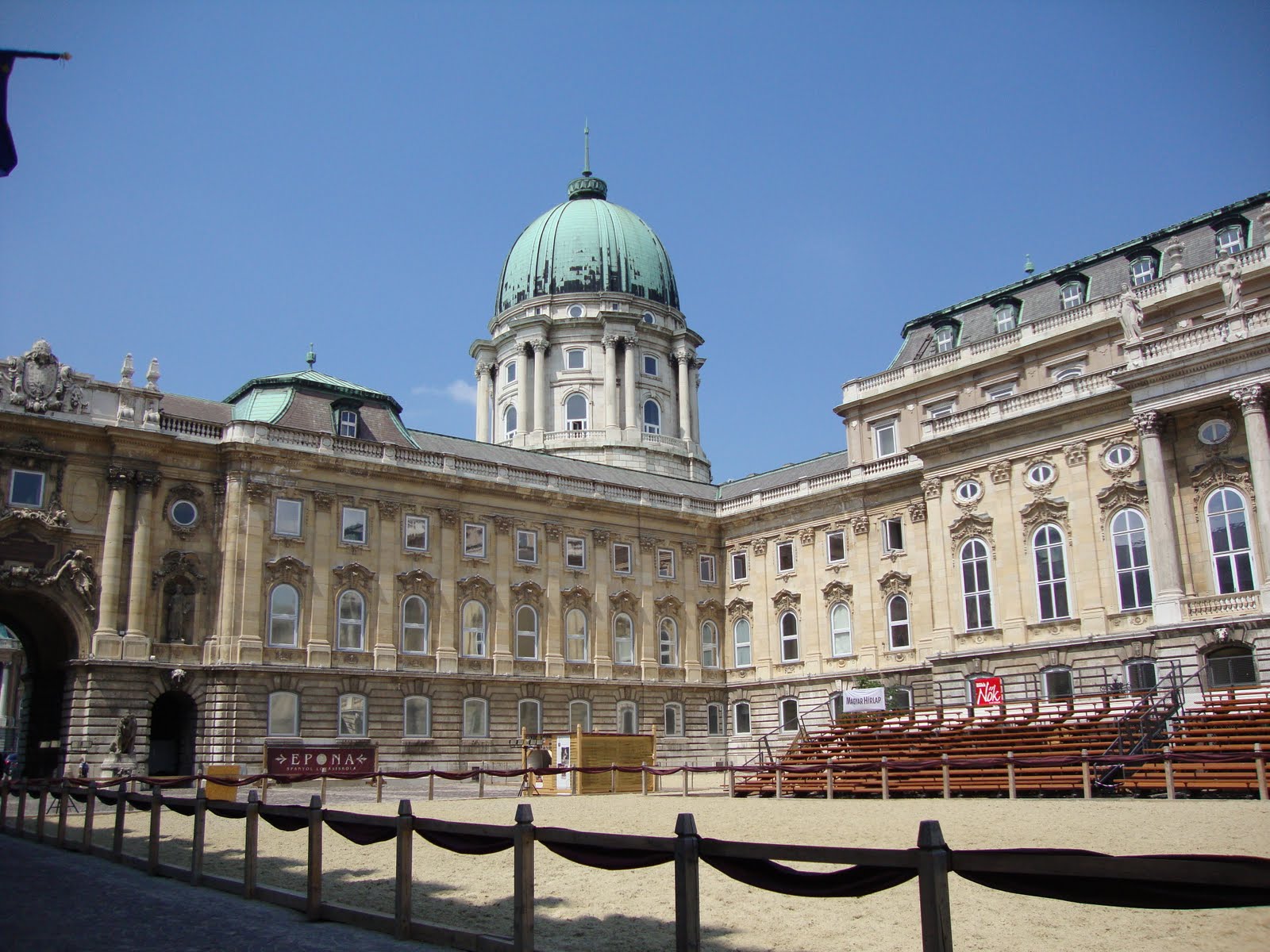
The Castle was built during the time of the Hapsburg influence in Hungary. The style was distinctly that of the Hapsburgs as it had a very neo-classical exterior which was crowned with a huge dome. The interiors of the castle was impressive too with a grand fountain which contained figures of Hungarian Magyar tribesman with their big mustaches and long pleated hair. A colorful garden completed the setting. The castle contained a couple of museums depicting Hungarian art and History and many great statues dating to the Hapsburg times.


After roaming around the castle it was time to get down from the Castle hill and walk along the Danube promenade. The Danube is one of the great rivers of Europe and no city embraces it as much as Budapest. The city's fascination with the river can be seen in the numerous bridges that were built across it. The biggest of them was of course the Chain bridge and walking along it was a real joy as you sensed that you are between the two cities Buda and Pest on either side. The view of the Buda castle especially was fantastic.

To end the day i took a cruise along the river which passed through some of the most famous buildings and historical sites along the river. The best part was going under the Chain bridge when you realize how big it actually is! Also impressive were the various other bridges such as the Franz Josef bridge and the Elizabeth bridge, each one uniquely designed. Even the Hungarian university is located on its banks along with various famous Hotels. One got a sense how the city had evolved around this river and the role it had played in the city's history. As the sun set it was the end of my first day in Budapest, it had been a hot and hectic day but well worth it!

June 2, 2011,Thursday

It was a new day and it was a day meant for exploring the Pest part of the city. As i started on my journey through Pest the old era of the Communists came to my mind. The second world war had been a triumph for the Soviets but it came at an immense price of over 26 million war dead! Its just such a huge number that it boggles the mind. When you consider the fact that the other allies, the US and the British lost about half a million lives each its a proof that it was really the Soviets who deserved most credit for winning the war. The war was proof for the Soviets how vulnerable they really were. A hundred years earlier it was Napoleon who had stormed Russia and now it was the Germans. This convinced the Soviets that if ever they would like to implement their communist principles and progress economically and politically they would need to avoid such attacks from happening again. Thus the concept of the eastern European buffer zone was born. It wasn't fair but that was the thinking behind it and thus the Soviets started setting up puppet communist regimes all around eastern Europe including Hungary. This eventually led to a self-contained, exclusive communist bloc in eastern Europe backed by the soviets which Churchill memorably referred to as the drawing of the Iron curtain across Europe.

The huge roads with their massive grey buildings reminded me of the Communist era. I actually felt lucky that i was able to walk around there for if i had been there 20 years earlier i would never have been allowed to enter the country in the first place! The place also reminded me of my time in East Berlin as i felt the architecture and the general atmosphere was similar. I guess Communism like religion was a way of life and dictated everything in a city and its people and led to a kind of uniform regimentation and i was not surprised that these two ex-communist cities should have looked similar under communism!

The first place i went was to the Jewish Synagogue which is apparently the largest synagogue in Europe. I had never been to a synagogue before and i felt excited to go in. The synagogue looked like a cross between a church and a mosque. It had huge minarets on the outside adorned with domes like a mosque and on the inside it had an alter and organ similar to a church. There were beautiful floral patterns on the ceiling reminding one of a mosque again. I was surprised to know that Hungary had and still has a large Jewish population and as with other Jews in Europe at the time of the world war underwent severe persecution from the pro-Nazi Hungarian government. Also surprising was the fact that the anti-semitic sentiment in Hungary pre-dated the one engendered by Hitler and the Nazis and the world war was an excuse to bring out this prejudice in the open. This goes to show that the Nazis were not the sole perpetrators of anti-semitism even though they were its biggest propagators. On the bright side there was also a memorial there to commemorate the people who helped the Jews during those hellish times. They were mostly diplomats who helped secure the endangered Jews with fake passports and documents including a Swedish diplomat! It was reassuring to know that even as humanity is capable of doing evil its equally capable of doing good too and its a kind of reassurance we need in our cynical world around us today.


From one religious place to another. The next stop was the biggest church in Pest - the St. Stephan's Basilica. The church sits right in the middle of the city and its huge dome leaps into the sky and can be seen from virtually any corner of the city. As i made my way towards the basilica it struck me just how huge the church really was. The church was modeled on the St.Peter's of Vatican and even though not as huge as the original it was enormous. What more it had a huge square in front of it which made the comparison with the original even more obvious. The interior was equally impressive and was designed in Baroque. The chapels on the side too were impressive and added flair to the church. The alter had a figure of St. Stephan , the patron saint of Hungary. The church was filled mostly with guide book armed tourists and the atmosphere was that of peace and quite. A short elevator trip took me to the doom and the view from there of the city and also of the Castle hill i had visited earlier was simply magnificent.


Next i started on my last stop in the city via the legendary M1 metro line. The M1 metro line is in itself an attraction , in fact it is a UNESCO world heritage site as it was the first ever metro line to be built in continental Europe. Here i could see the difference between this and the other metro lines. Owing to its historic stature the M1 line was splendidly maintained and had a modern yet old time feel to it. Even the carriages had a touch of class to them. It runs from the Danube promenade right along the city's main street - the Andrassy street - up to the Hero's square stopping by numerous other Pest attractions along the way.

The metro ride ended at the famed Hero's square which was constructed on the occasion of Hungary completing a millennium. The square consisted of a central column with the archangel Gabriel perched on top holding the Hungarian crown in his hand. The column then was surrounded by a semi circle of colonnades housing the statues of some of Hungary's most important saints and kings. The statues themselves were an interesting study. As the world knows the Hungarians are descended from the so called barbaric Hun tribesman who roamed Eurasia and the statues reflected these historic Hun figures with their long pleated mane, huge mustachios riding horses. Also present were saints who help setup the Hungarian nation including St.Stephan. Interestingly during the communist era the statues of some great communist leaders was installed here but with the downfall of communism these statues have been ported to a location outside the city. This is a great illustration of how the city has transitioned from communism to the modern era in the last 20 years!

Thus ended my trip of the city of Budapest. I had always wondered what the cities beyond the Iron curtain looked like and was happy to have had the good fortune of actually experiencing it here in Budapest!

Wednesday, April 27, 2011

Barcelona : More than a City


There are some cities in this world which go beyond their earthly borders and represent something more than the tangible. Such cities stretch the man-made definitions of cities and places. In India Mumbai and Calcutta could be slotted into this category as they have come to represent more than their land mass and are etched in the minds of people. Barcelona too is one such city as its more than a City as it represents an entire people. It was to Barcelona i headed next on this second leg of my Eurotrip.

April 23, 2011, Saturday

The first time i had ever heard of Barcelona was in 1992. It was the year of the Olympics and Barcelona was hosting it that year. I was just 9 years old then and in my world at that time there were only two cities in the world, Bangalore where i lived and Delhi which was our capital. This new name aroused a curious interest in me. My dad even got me a school bag with the logo of that Olympics. Now 19 years later i was finally visiting this city and the memories from those innocent times came flooding back. The spectacular opening ceremony, my favorite Carl Lewis losing the 100m gold, Gail Devers' stunning 100m run and so on and on. I was woken from this trance when my plane touched down at the airport.

This was my first ever visit to Spain and the weather Gods seemed to have been aware of it as they had lit up the sky with brilliant sunshine. The route from the airport to the city was dotted with beautiful little Spanish villages. Some on the plains and some others on mountain tops. The whole setting was so mesmerizing. The quaint little villages with their small churches and beige colored houses and the people enjoying a barbeque looked like another world. Amidst these idyllic villages i felt so disconnected from the world i had come from. How did i, a stranger from far off India get to these idyllic little Spanish villages which i had never dreamt of? I mused to myself. It was one of the most surreal moments of my life.

As the bus entered the city i started to realize how huge the city really was. It has over 1.5 million inhabitants which by European standards is huge. Also architecture seemed to be the hallmark of the city as even the most utilitarian of buildings such as apartments and bus stations where built with a typically Spanish architectural finesse. The buildings were built with exquisitely styled exteriors and had balconies that were adorned with beautiful flowers and flying the Catalan flag created a distinctly Spanish flavor. It was time to start my travel into the city and the first place i chose was the Old city called the - Barri Gottic or the Gothic Quarter.

As with most major European cities, Barcelona was founded by the Romans and the original city they built is now called the Gothic Quarter. The Gothic quarter houses some very old palaces and squares dating back to the middle ages and also some remains of the Roman wall and some aqueducts. I started my travel from the city's central square - Place Catalunya, and took the famed La Rambla street. La Rambla is the main street of Barcelona and is a pedestrian street filled with people during all hours of the day. I waded my way through the people and entered a smaller street and headed to Barcelona's oldest church, Catedral de la Santa Eulalia or La Seu as it is commonly known as. The winding narrow streets reminded me of Italy and i started to realize how similar these two countries really are. The narrow street finally ended at the foot of the great church and it was a sight to behold. A mass of people and a street musician playing the Spanish guitar added color to the whole setting.


Next i headed to the Royal Palace. This was palace of the kings and queens of Spain before they moved base to Madrid and it has quite a bit of history. Christopher Columbus apparently declared his discovery of the new world to the king and queen here. There is also the letter which Columbus presented to the king declaring that he conquered the new world for the glory of Christianity and Spain. How some one can make such an arrogant declaration on behalf of the innocent natives of the new world is beyond me but that's what evidently happened here. Realizing that i was at the same place where the history of the world took a new twist was quite chilling.

Barcelona may be a Spanish city for the outsiders but for its citizens its a Catalan city and to be sure they add the line - 'Catalonia is not Spain'. The Catalans claim a distinct language which is a curious mix of French and Spanish, a distinct history with various conflicts with the Spanish crown and also a distinct culture. The history of this deep divide started here in the Gothic quarter. Spain even though is a small country it is divided into various conflicting regions. The central Castile region with Madrid as its capital is historically the most powerful region and also the most intimidating. Catalonia on the other hand is on the north eastern corner very close to the French border. As the legend goes the queen of Spain during the era of the discoveries, queen Isabella was from the Castile region and was biased in the distribution of the riches from the new world and allocated a disproportionately large part to her native region much to the displeasure of the Catalans. This bias slowly got institutionalized and over the years Catalonia and Barcelona as a result fell behind in terms of development. In fact this lack of development during the start of the new age of discoveries is one of the reasons why there is such a well preserved Gothic quarter here in Barcelona. This bias however has led to a deep feeling of separatism in the minds of the Catalans and hence their stress on a distinct Catalan identity. Barcelona hence has become more than a physical city and represents the identity and aspirations of the entire Catalan population.

After going through some magnificent squares and their churches and palaces they contained i made my way to the Placa Reiel which is basically the 'Royal Square'. It was a beautiful square surrounded on all four sides by palaces with a fountain in the middle. The architecture again was spell binding and the throngs of people and pigeons provided a perfect setting.

I exited the square and made my way down the Rambla towards the sea. A few steps later i was greeted with the sight of the Columbus monument. It was a magnificent tall column which was perched at the edge of the sea. It had a statue of Christopher Columbus on top with the great man pointing his finger towards the eastern horizon. I guessed he must be pointing to India in that direction as that was his life's ambition which i might add was unfulfilled. I could almost hear him say - 'Let's go East'. Nevertheless he discovered the new world in the process and gave the history of the world a new direction. The column itself is well decorated with carvings and statues depicting Columbus' and Spain's conquest of the new world. The Spaniards are shown as deliverers who civilized the savage natives. No one seemed to realize just how savage the Spaniards and Europeans in general behaved during this whole civilizing-the-natives process. Anyway the Spaniards seemed to revere Columbus as a great hero who brought glory to Spain.


Getting out of the Gothic quarter was like coming out of a history museum. Once out i started for the best park in Barcelona - Parc Guell. This park sits atop a hill and was designed by the maverick genius Antonio Gaudi. It was initially planned to be an apartment complex but as with all Gaudi projects it got delayed infinitely and ended up as a park. As i made my way into the park i got the first glimpse of Gaudi's genius. Some artists seem to be born for certain cities. As Bernini was meant for Rome and Michealangelo born for the Vatican, Gaudi was always meant for Barcelona. Gaudi was truly unique and if anything his style could be called as 'Naturalistic' for his creations seem to almost naturally arise from the ground and blend seamlessly with the surroundings. This was the case with this park too as it had numerous buildings and artworks that resembled this style. As an added bonus the views from the park were simply magnificent as most of Barcelona's attractions were visible from there.

After a pleasant time at the park my first day of traveling ended and it had been a hectic day with both body and mind asking for a rest. However i was already looking forward to the next day.

April 24, 2011, Sunday

If previous was a fabulous day then today promised to be even better as i would be covering the most popular attractions of Barcelona. The morning though was drenched with the early morning rain. As i set out on my expedition i hoped the rain gods would relent and it would turn out to be a sunny day. First up on the menu was the Olympic stadium.

As i recounted earlier the Olympics was my first connection with Barcelona hence i was determined to visit the place. The efficient metro system took me in no time to the Placa Espanya, the second most important square in the city. Even the names of squares were tinged with politics i thought. Hence the biggest square was name after Catalunya and the second biggest was named after Espanya, the Catalan bias coming through here as well! The Olympic stadium nestles on top of a hill called 'MontJuic' which is Catalan for 'Mount of Jews'. However the escalators along the way made my life easy as i started my climb.


MontJuic also contains the spectacular Catalan museum which gave the impression of a palace rather than a museum. As i moved ahead i realized that i was the only person on the way as it was pretty early in the morning and also it was raining a bit. Anyway, i soldiered along and quickly made my way to the Olympic village and lo and behold within moments i was in front of the Olympic stadium. The stadium looked quite magnificent with the statue of prancing horses at its head. As i stood there i remembered the opening ceremony of the 1992 Olympics and more so the spectacular lighting of the flame. The lighting was very charming as an archer stepped forward and shot a fire tipped arrow towards the Olympic cauldron hoisted on the balcony. The arrow went as intended by the skilled archer and miraculously hit the target and lighted the Olympic torch. It was a jaw dropping sight for a 9-year old then. As i looked around the village it had several other stadiums which would have hosted several of the Olympic events. However sadly the stadiums seem to have become white elephants as they were being seldom used now. Oh, well they are the result of the curse of the modern Olympics, but on the positive side they brought Barcelona into the limelight hence all the money and effort spent on them were worth it i guess.


From one great stadium to another i headed to the pilgrim of every football fan- the Camp Nou. There is no greater symbol of Barcelona and indeed of the Catalan people than the Barcelona Football club and the expansive Camp Nou was their home ground. Barcelona FC is literally and figuratively the 'people's club' as it is owned by the people of Barcelona. Hence each citizen of the city owns a bit of the club and as on the day it has 200,000 registered members which is a record for any football club in the world. This almost 'republican' club has been pitted in the Spanish league against the other great Spanish club Real Madrid which as a matter of fact is called the 'King's club' because of its proximity to the rulers. This rivalry is one of the fiercest in the world as its not just a battle of footballing skills but ideology, the free-spirited republicans versus the establishment if you will. In fact the rivalry is often attributed to the under-performance of the Spanish national team as the rivalry split the people so deeply that they couldn't reconcile themselves even when playing for the national team. As i mulled about this great club and its great rival i arrived at the supreme edifice of the Camp Nou.

My first memory of Camp Nou goes back to the epic Champions league final between Manchester United and Bayern Munich here in 1999 when Manchester United stole a thrilling victory over Bayern on that day in the dying minutes of the game. Those were the early days of football in India and seeing 100,000 people inside a stadium was a thrilling sight for me. I secretly hoped i would some day go there but never thought i would ever. Life is strange and here i was standing in front of that same stadium i had dreamt of!

The Camp Nou is one of the largest stadiums in the world with an estimated capacity of 100,000. However the exterior does not vouch for this huge number and is pretty unimpressive. The reason could be that the actual pitch has been build into the ground hence stealing some of the exterior's height. As i got to the main entrance i saw that it was still locked as the opening hour had not yet come, however i saw lots of fans already queuing up. By the time the gates opened the numbers had reached to well over a 100! Finally i got my ticket and started the Camp Now tour. First up on the tour was the Barca museum.

Barcelona FC was founded in the year 1899 by a Swiss expatriate called Joan Gamper along with a few Spanish and English enthusiasts. This explains the presence of the English flag in its logo i thought to myself! He also chose the club colors to the now legendary dark blue and red. There are several theories behind these colors , some say that being a republican club it chose the colors of the iconic French first republic founded by Robespierre while others believe they were the colors of Gamper's former club, FC Basel. Whatever be the origin the colors have become legendary and are identified with the club all over the world. These were some of the facts that the museum contained along with several overflowing trophy cabinets including the one containing the most prestigious trophy in club football - the UEFA Champions league. I had seen it several times on TV and seeing it in person was amazing. Then i made my way to the stands and the entire size of the stadium became evident to me. A sea of red and blue swept my eyes and i imagined the great contests and players who had played here. The middle of the stands were engraved with the the slogan of the club 'Mes Que un Club' which means 'More than a Club'. It was such an apt title as Barcelona FC is not just any other club, it like the city it represents is more than what they are claimed to be. Both the club and the city represent the identity and aspirations of the Catalan people. Then i made my way to the Press area, dressing room and even the commentary box.


Finally i made my way to the actual pitch and it was an exhilarating moment. Some how the view from the stands did not match this pitch-side view. The neatly manicured grass glistened with the club's logo and beside it was the player's dug out. Just thinking about the atmosphere during match-day was giving me goosebumps. This pitch had been witness to some of the most gripping matches in the football world and just being there and soaking up its environment had just made my day. As i exited the Camp Nou i overheard the cheers from a nearby ground and it turned out that it was due to a practice match that was going on between the Barcelona youth teams and the club's supporters were out there supporting the next crop of Barcelona superstars. Interestingly the youth academy at Barcelona is nicknamed the 'quarry' which is quite apt as they are the quarries that shape the rocks that would build this great club in the future! Once i came out though i was filled with a sense of achievement as i had visited one of the places i had only dreamt about. After visiting the Camp Nou i was still in a dazed state and next up for me was the most unusual church in the world.

The Sagrada Familia is one of the great churches of the world and its renowned the world over for its spectacular and unusual architecture. As i was on my way to the church i was remembering all the great churches i had seen here in Europe, the Notre Dame, St.Peter's , the Duomo of Florence, St.Mark's cathedral of Venice and each had been different in its own way but still adhered to classical architecture. However the Sagrada Familia is famous for its unusual architectural style and i was really looking forward to being there. As i got off the metro station the first thing that struck me was just how tall the Sagarda Familia was. I had to really crane my neck to take in the full height. As i looked at this supreme church i was awestruck by its architecture, it looked so natural that the church and the nature around it could not be distinguished. The church seemed so 'organic' that it seemed to have a life of its own. Gaudi's signature was everywhere, right from the very earthy exterior to the unusual sculptures , it was Gaudi at his craziest and his best.

What impressed me most about the church's exterior was the way in which classical christian motifs were rendered in unusual forms. For example there was a sculpture of the betrayal of Jesus by Judas which is a classical Christian motif, it was beautifully and unusually rendered by Gaudi with the human forms looking like they had been carved out of wood. There was no fine touches to the human forms instead they were given sharp outlines. Hence even though Gaudi's sculpture was different you could easily identify the christian motif behind it. The same style was replicated in other sculpture settings ranging from the manger to the scene of the crucifixion. It was utterly spellbinding. Also impressive were the doors to the church which have in them the word 'Jesus' inscribed in hundreds of different languages including Catalan.


The interior of the church was equally impressive. I was pleasantly surprised to see that the construction of the interior looked completely finished whereas i had assumed that it would be still going on and will be like a construction mess. Which it was a few years ago but luckily not any more. The alter looked magnificent with the statue of the crucified Christ carved in Gaudi's inimitable style hanging from two wires giving you an impression that it was hanging mid-air. The row of columns too looked very natural and reminded you of the tree trunks of a dense forest. The balconies and sitting areas on the side too looked very natural and blended in beautifully with their surroundings. In fact i was convinced that they were carved out of wood and i had to actually touch them to realize they were indeed stone, such were their naturalness. As i looked up at the ceiling the cluster of columns met up in unison to give the impression of a giant canopy. The choir sections were built so wonderfully at different levels of the church and it was said that coupled with the acoustics of the church the music they produced was a delight to the senses. Also fascinating was the way in which the windows were so intelligently carved as they not only provided artistic value but also a practical usage as they lighted the church with the right amount of sunlight.

As i marveled at this masterpiece of a church i experienced a sense of calmness about me away from the chaos of the outside world and also the restlessness of the inner self. As with all churches it gave a sense of peace and solitude. Still in a trance i exited the Sagarada Familia and started on the last leg of my tour which aptly i wanted to end by witnessing the masterpieces of that great artist, Gaudi.

Though the Sagrada Familia was Gaudi's magnum opus he did build a lot of other monuments inside the city. One of his most emblematic works was the Casa Batllo. As i looked at this buildings i felt as though Gaudi had taken a vow of never putting any straight lines on it as everything seemed to be curved. The facade was beautifully decorated with broken mosaic of different colors and the coup de grace was the balconies which were designed in the form of a venetian eye mask. It was really a sight to behold.


Across the street from the Casa Batllo at a stones throw distance is another of his master pieces - the Casa Milla better known as the La Pedrera ('the quarry' in Catalan). Here again Gaudi avoided straight linens and gave the building a wavy exterior. It was as if the whole building was fluid and it was flowing like the waves of the sea. The most impressive aspect of the building for me was the ornate balconies. Gaudi wraps around strands of metal around the crevice of the balcony as if he is winding a wreath of flowers around it. Metal never seemed more tender or more beautiful.


As the sun set on the distant horizon it signaled the end of my tryst with Barcelona. A city and culture i had always admired was arrested in my mind forever. As i left the city i felt a sense of accomplishment and wonder at having had the good fortune of being there. I was physically and mentally exhausted and all i could muster was a silent 'Grascias Amigos'!

Monday, January 17, 2011

Déjà vu

Distance gives perspective. So the ten months after my return from Sweden were a good time for me to look back at the visit. It was a perfect trip as i was able to visit all the places i had dreamed of and also some which i had never dreamed. As i used to sit on my bed and think about the experiences that i had, i could almost remember every turn i took and every flash of thought that ran through my mind as i visited those places of my dream. Just as i thought things couldn't get any better, they actually did. I was going on another trip to Sweden come the new year.

A familiar excitement gripped the mind as it wrestled with the thought of making another trip, it was a feeling of déjà vu. The preperations went off well as i knew exactly what things to pack. And then came the D-day and the obligatory but confused good byes to friends and family when you dont know whether to be happy or sad.

Since this was my second trip i was more relaxed than last time. Spoke more confidently at the ticket counter whereas last time i had difficulty in getting the words out of my mouth thanks to my excitement. After the routine immigration and security checks i finally reached the port where my plane was stationed.

I was a good 2 hours early so i sat back on a chair and started to observe the people who were getting ready to board the flight. A serious looking German girl sat next to me writing furiously on her notepad about her experiences in 'kerala'. Meanwhile an Italian family settled in front of me with one of the ladies arguing something excitedly, her hands and eyes speaking more than her mouth. Adjacent to me an Indian girl sat with a laptop reading intently a presentation titled 'Customer Relationship Management'. This is what stereotypes are all about i thought, the stoic German, the excited Italian and the studious Indian!

As all waitings go the two hour wait took a long time to finish and finally when it did i found myself in the belly of the Boeing 747 on route to Frankfurt. The night went off uneventfully with me again failing to get a decent sleep on an aircraft like last time as i kept looking at the red line on the monitor as it traversed the world map onto the final destination - Frankfurt.

As morning dawned Frankfurt arrived. The last time i had landed here it was Summer time and the view was spectacular - the best that i had ever seen. Sadly this time as it was winter the view was a bit dull. Once the plane landed a good half an hour late, i was woken off my flashback by the thought that i just had an hour's time to catch my connecting flight to Sweden. Here is where my (mis)adventure started.

I knew one hour was too less a time to get out of an airport as big as Frankfurt, still i was hopeful. I reached the first hurdle at the immigration counter where the non-european section of the queue in which i was hardly moved. Finally my turn came and funny enough the same immigration official whom i had met the last time when i passed through Frankfurt 15 months ago was at the end of the queue. As i was thinking to myself if it would be silly of me to think that he would recognize me the officer started smiling at me and handed me the passport back and let me through without asking any questions. I had no time to humor myself with this incident as the clocked poked me and said that i just had half an hour to go.

I knew i was behind the clock as i rushed towards security. To my horror the queue there was even more daunting as the recent terrorist threat perception across European airports had made the security very stringent. This just isn't my day i said to myself. As my turn at the security came i realized how thorough the check was as the guard even check my shoe soles as he finally let me pass after a thorough checking. I hastily looked at my watch. I had exactly 15 minutes to rush to my port - A40 - which to my continuing bad luck was at the very end of the terminal. Even Usain Bolt will have a tough time beating the clock here i thought to myself.

I started my run as i prepared myself like a 100m sprinter with one strategy. Get your head down and run like crazy. And i did run like crazy with the trolley of my hand luggage trying its best to keep pace with me. As i ran i sensed another couple which were running like me and funny enough they spoke in Swedish and i realized that both of us must be after the same flight. I smiled to myself thinking that i wasn't the only one with a predicament.

As i reached A20 i checked the watch again. 5 minutes to go it said as i took a sharp turn into a walk-way. All along i kept rattling excuse-mes and pardon-mes as the good people gave way for me after seeing my pace of running. Another slide off a walk-way put me onto A32 as the count down became 3 minutes. This is going to be touch-and-go i thought. A couple of more exhausting minutes later i sighted the A40 port and i felt it was like the last lap of the field as i strained all the little muscle i had hoping to get across the line. As the clock ticked down i finally reached A40 panting like a marathon runner who had just finished the race. I was completely out of breath as i let the boarding pass do the talking as i handed it over to the flight attendant. She directed me to the flight and no sooner had i entered the plane the pilot sounded the message 'Boarding complete'. Now hows that for drama. Once inside i sank into my seat as bewildered people around me wondered what made me sweat in this winter of winters.

All the running at Frankfurt had exhausted me and the entire duration of my Swedish flight went in recovering from the adventure. No sooner had i recovered the plane descended into a cloudy , foggy Gothenburg sky. This was again a contrast to the clear skies of last time as visibility had reduced to almost zero. Finally the plane landed after giving a few nervy bumps and i had finally made it to my destination.

So as i write this i look forward to the next few months and to further adventures in Euroland. Hopefully they will be much happier and less strenuous than the one i have started with above. So hoping for the best and watch this space for more!

Sunday, January 31, 2010

Florence: The Home of Renaissance

Every age needs a city. The classical age had Athens, the Roman age had Rome, the enlightenment had Paris. Similarly if there was a city that represented the Renaissance it has to be Florence. Florence is where the Renaissance started and it was where it was nurtured. No trip to Italy is ever complete without a visit to this home of Renaissance. So it was Florence then where i headed next.

December 31, 2009, Thursday

As i look into my watch it reads 2.30 PM. It had been an hour and a half in what seemed to be a never ending queue. The board near the ticket counter read 'Minimum waiting time 2 hours, maximum 3 hours'. Not sure whether that reassured me at all. Of course i had been prepared for this queue, after all this was for one of the most celebrated art museums in the world - the Uffizi Gallery.


Uffizi simply means 'office' in Italian. It was indeed built to house the offices of the Florentine administration. As with most things in Florence it was constructed by the Medici family. After serving its time as an office it was converted to an art museum to house some of the most spectacular works of Renaissance art. Since Florence was home to many Renaissance masters it had a huge collection of art work and Uffizi was the unanimous choice to hold all that art.

The Uffizi is the third most famous art museum in the world behind the Louvre and the Vatican museum. I had seen the first two and the Uffizi would complete a trilogy of museums for me. I could scarcely believe that once i see the Uffizi i would have seen the three greatest museums in the world within a span of five weeks. Truly incredible. Unlike the other two , the Uffizi is not very extensive. However it makes up for the lack of size with sheer quality of the collection on offer. Some of the greatest Renaissance masters where from Florence thereby the collection is incredibly rich.

The slow moving queue gave me a chance to look around at the Uffizi building. The building is essentially a three sided rectangle with the missing fourth side opening into the Piazza della Signoria. The two parallel longer sides consist of most of the collections while the short third side connects them both. Remarkably there are niches all over the building's exterior which hold life sized statues of the many remarkable Florentines who graced the world stage. It includes Leonardo da Vinci, Michelangelo, Raphael, Amerigo Vespucci, Machiavelli and many others. Each statue is well crafted and is a tribute to the person it represents.

After nearly two and a half hours in the queue i was finally inside the Ufizzi. Like the kid who has been given his long awaited toffee the people who entered the Ufizzi were overjoyed. Once inside i headed straight to the second floor and onto the famed hallway. The hallway similar to the Grand gallery at the Louvre was very long and seemed to disappear into a distance. The hallway was marked on both sides by spectacular statues of Greek and Roman antiquity. I wondered how numerous the statues of antiquity are as you always tend to bump into one of them wherever you go in Europe. The statues ranged from self portraits of Roman kings and their families to characters from Greek mythology.

As i walked through the hallway i could imagine why this place was an office.I could almost sense what it must have been four hundred years ago when this place would have been abuzz with all the activities of an office. The hallway opens into rooms which house individual collections. The collections are arranged in a chronological order with the starting rooms dedicated to low renaissance artwork and the later rooms to middle and high renaissance artwork. This was a very intelligent way of ordering as i could see two paintings of the same artist being completely different because one was painted during low renaissance and the other during the high renaissance period. The period in a way influenced the artwork more than the artist himself.

Once i went through the artworks of the low renaissance i headed next to the high renaissance section which as expected had all the master pieces. One of the rooms had a collection dedicated to great painter Botticelli who was the quintessential Renaissance painter who made use of techniques and themes of antiquity which was what the spirit of Renaissance was all about. There were two paintings that were the center of attraction here - the Birth of Venus and the La Primavera (or the Spring). Both involved the Roman Goddess Venus and were just amazing to watch. I wondered why Venus was such a hit with all the artists - classical as well as modern. Maybe being the Goddess of Love could have been the reason i thought to myself!

After the Botticelli collections i went through some more collections belonging to other masters such as Leonardo da Vinci, Raphael and Michelangelo. Although its true that the Louvre has the best collection of Italian artwork owing to the French occupation of Italy, the Uffizi still manages to house some really excellent pieces of art by these Italian masters. This shows how prolific these artists were, so much so that three really huge museums fail to hold all their collections and hundreds of their collections are still scattered all over Europe.

After spending more than two hours inside the Uffizi it was time to leave as the staff started to close the doors. As i exited the doors i realized that another of my dreams - that of visiting the Uffizi was realized and that made me really happy and brought out a content smile.

January 01, 10, Friday

The new year had brought the rains with it. As i sat in my hotel i saw the rain pouring outside. I waited until it lessened in intensity and then began my travel for the day. As i walked through the narrow winding streets of Florence i began to think the way we in India percieve rain and how it is percieved here in Europe. In India we are lucky to have more or less rain free whether for most of the year, at least people like me in Bangalore. However here in Europe rain is like a part of everyday life, you have it more often than not and so learn to live with it. As i saw the people around me none of them seemed to be complaining about the downpour as if they had reached an agreement with the rain gods that they will not whine. Looking at these happy people cheered my sobre mood as i began to explore the city.

Like all Italian cities, the central city square is were the heart of Florence is. The central square in Florence is called the Piazza della Signoria. The Piazza abuts the Ufizzi Gallery and the art bug of the museum seemed to have bitten the Piazza too as it is filled with amazing pieces of art. The central attraction of the Piazza is the world renowned Michelangelo's statue of David. In fact the original statue is present in the Galleria Academia and the statue at the Piazza is just a replica. But i can assure you that this was no ordinary replica because this was no ordinary statue. The statue was chiseled by Michelangelo astonishingly when he was only in his early 20s. Its much bigger than a life sized statue and is 'the' benchmark Renaissance statue. The influence of classical art was very obvious and Michelangelo seemed to depict the perfect emotion in his David. The statue represents the famous biblical story when David slays the giant Goliath and Michelangelo captures the moment just after the actual event. As i witnessed the statue i was amazed by the talent of Michelangelo. Just a few days earlier i had seen his genius in the paintings of the Sistine chapel and here now i witnessed it again but this time in stone.

The mesmerizing David is just one of the many artworks strewn across the square and the nearby Loggia della Signoria which is a small enclosure that hosts many other statues of the Renaissance period. Chiefly among them is Donatello's bronze statue of David. As with Michelangelo's David here too the same biblical story is depicted. The David here seems boyish and holds high the head of Goliath. It was simply amazing to see two artworks on the same theme by two masters separated by a few feet of each other.

The Piazza opens into the uffizi and it being the new year the gallery was closed and i dint see much activity there. The uffizi opened onto the banks of the Arno river. The river seemed to be in a particularly bad mood as it violently transported mud and debry in its streams. From here i caught the glimpse of the famous Ponte Vecchio bridge. This is the most legendary and oldest bridge in Florence, in fact its name means 'old bridge'. Florence i heard had quite a few other bridges across the Arno, however they were all destroyed during the allies bombing in WWII thankfully leaving the Ponte Vecchio more or less intact. The bridge was like a modern day mall with shops dotted on both sides selling everything from jewelry to pizza. The bridge seemed to be the commercial centre of the city and had a busy thoroughfare. As i looked above i saw the famous Vasari corridor. The corridor actually has a very interesting history.

Renaissance Italy for all its high art and sophistication was a very dangerous place. Italy did not exist as a united nation then, instead it consisted of a bunch of city states. These city states had their own distinct identities and often quarelled with one and other. Each of these city states was controlled by influential families. To understand the Italy of that time one has to look at the modern mafia. As with the mafia these powerful families acted as middlemen between the rulers and the citizens. Hence they were like the strong men to whom citizens went if they had any grievences and also the rulers relied on for muscular might.

Florence too was controlled by the very influential Medici family. Though originally merchants and not belonging to the aristocracy the Medicis by the sheer power of money and realpolitik attained control of the city. However the control of the city came with its price - that of constant threat from rival families who did not take a liking to the Medicis as they considered them as upstarts who had usurped their right. This rivalry in one instance led to sevaral assassinations too and this made the Medicis very conscious about their security. Hence when Cosimo de Medici assumed power he and his able advisor Georgio Vassari took security to a new level. Since the royal Pitti palce lied on the other side of the Ponte Vecchio the Medicis had to cross the bridge to enter their office at the Uffizi. This they percieved to be a grave threat and they devised an ingenious plan. They constructed a corridor that ran from inside the Pitti palace and then over the Ponte Vecchio and finally ended inside the uffizi. In this way the Medicis will be safe from any attack. It also helped that Vassari was an able architect and he realised this corridor which came to be named after him as the Vasari coridor. History seemed to play itself out before me as i stood on the Ponte Veccio and gazed at the vasari coridor as i imagined the bygone days. Interestingly Vasari was the man who coined the term Renaissance, so he was quite a talented man!

From the Ponte Vecchio i moved to the Pitti Palace which was the official residence of the Medici family. The palace was pretty big and looked more like a fortress than a palace. Considering the threats the Medicis always faced no wonder it had the look of a fortress. One could also see the start of the Vasari coridor as it shoots out from one of the walls of the palace.

Florence like other Italian cities is full of great churches and cathedrals. Hence i first went to the Santa Croce church. This is the second biggest church in Florence and is notable for the remarkable people buried inside. Famous Florentines of the Renaissance era like Michelangelo, Gallileo and also modern day greats like Marconi were buried here. Even their tombs were remarkable. While Michalangelo's tomb had beautiful paintings befitting the man Gallileo's tomb had a statue of him gazing towards the heavens which was quite apt again.


Lastly it was time for me to visit the biggest attraction of Florence - Il Duomo. Formally called the Santa Maria dell Fiore it is commonly refered to as the Il Duomo refering to the famous dome that adorns it. The Duomo is one of the biggest and oldest churches in the world and its dome is widely considered as the best example of Renaissance architecture. The story of the dome is really interesting. During the 12th century when an overly ambitous family was in control of Florence they decided to build a church to rival all churches in Italy. In their over confidence they planned the biggest ever dome in the world at that time. The dome of this scale had never been attempted after the building of the Pantheon in Rome and it was widely believed that the technology for building such huge domes had been lost with the fall of the Roman age. The sceptics were proved right and the dome never rose atop the church and it remained domeless for more than 200 years , a shameful reminder for all of Florence.

With the ushering of the Renaissance in the 15th century people started to regain the lost knowledge of the classical age and started to solve vexing problems. Incidentally the Medicis had assumed power round about the same time and they needed to make a bold political statement and what better way to do one by buiding the long awaited dome. Thus backed by the Medici money and the spirit of the Renaissance builders around Florence started to work on the problem. Among them a brilliant architect name Brunelleschi came up with the perfect plan. Brunelleschi through his ingenious planning and innovative thinking finally realised the dome which turned from a shame to the crowning glory of Florence.

The Duomo's exterior is a wonderfulful sight. It was a welcome break from all the Gothic churches which had a plain unicolor exteriors. The Duomo instead had a beautiful exterior made up of White, green and pink marble. Add to it the remarkable paintings and huge doors it was a sight to behold. As is customary in Italy the church was accompanied by a huge bell tower named after the famous painter and architect of the period,Giotto. Opposite to the church there was the baptistry which is world renowned for its doors. The doors made of bronze has 12 famous biblical stories emblazoned on its, 6 on each side and is a great sight to watch if you get through the crowds that is. Also near the church there is a statue of the man who built the dome , Brunelleschi who is seated and quite aptly gazes towards his great dome. As i entered the Duomo what struck me was the sheer size of the place. It was really huge. The dome too looked befittingly huge and was adorned my numerous paintings from the bible. Other than the dome it was like a typical Italian church which amazing chapels adorning each side with remarkable artwork.

After the Duomo it was time to leave Florence. The city had lived up to its billing and i was truly happy at having visited this home of Renaissance. With that my trip of Italy was over. It had been a long, tiring but fruitful trip, one i had always dreamed of.

Saturday, January 30, 2010

Pisa: Where Time Leans

History always tends to give a moment to every city or town to come to prominence. In the same vein a quaint little town in Italy came to the world's attention during the middle ages. This was the lovely town of Pisa in Italy. legend has it that at the time of the construction of the bell tower to the central cathedral the ground beneath gave way and the bell tower leaned at an angle to the ground. Pisa is where i headed next..

December 31, 2009, Thursday

It was six in the morning and save for a couple i seemed to be the only passenger in the compartment. The train started to chug along the brilliant Tuscan countryside. The view outside was stunning. There was greenery everywhere, dotted with country homes and churches. I started to wonder about the varied landscape of Italy. Italy is a bit like India when it comes to variations in landscape. And for a small country that's quite a surprise. In the north it is crowned by the beautiful Alps, then you have back water towns like Venice, further south the beautiful wine growing stunning landscape of Tuscany, further down you have the great cities of the empire like Rome and further still you get to the wonderful Mediterranean coastal towns . Italy has something to offer to everybody, no wonder emperors throughout history coveted it so badly.

Unlike the cities i had visited previously in Italy, Pisa is a pretty small town. The houses and buildings were small and cute and there were large swathes of greenery everywhere. The river Arno cuts through Pisa and divides it into two halves. The bridge across the river is one of the most beautiful scenes i have ever scene in my life. In the early morning sun the water gleamed and reflected the quaint little houses that bordered the banks. The sight was truly amazing. Pity that i had only half a day to explore this place i thought.

The Leaning tower is the central attraction in Pisa and is located in a complex called Piazza dei Miracoli or the Square of miracles. The name seemed quite appropriate as the leaning tower came into view. It looked like an absolute miracle and seemed as though time itself had leaned. There were three buildings in the Piazza. The leaning tower of course and in front of it was the Cathedral and in front of it was the Baptistery. All three buildings were white in color and contrasted well with the green pastures around them.

Bell towers are a typical Italian artifact. Most churches in Italy have a bell tower accompanying them Usually the churches tend to be the highlight. However here in Pisa the bell tower itself is the main draw. Wonder what the cathedral which in itself is beautiful must be feeling with all the adulation the bell tower gets. The lean of the leaning tower is very prominent as you can compare it with the straight wall of the cathedral. However when you approach it the size of the tower overpowers the lean and you feel as though the tower is in fact straight. One end of the base is weighted with lead bricks so as to prevent the tower from leaning further. Thankfully there were no wires attached to the tower as i had seen sometimes on TV and the tower was standing on its own.

Once near the tower i decided to climb it. In fact i was lucky to get the opportunity to climb the tower as until a couple of years back climbing was barred citing safety reasons. The spiraled staircase within moved me floor by floor to the top of the tower. The bell was there alright but few seemed to notice it. The view of the Piazza and that of the city around it was just stunning. The cathedral was right in front and looked pristine as the sunlight kissed its white exterior. The beautiful baptistery also peaked through from behind the cathedral.

The leaning tower is also famous for a unique experiment conducted by Galileo in the 15th century. The scientist wanted to prove that two objects took the same time to fall to the ground irrespective of their sizes. As the scientist looked around searching for a tall building to conduct his experiment he noticed the leaning tower. Finally one fine morning he made it to the top of the tower and conducted his experiment and proved his hypothesis. As i stood thinking this scene from history i was brought back to reality by the cries of the security guard who was telling everybody that our time was up. Due to safety reasons tourists are allowed only 20 minutes on top of the tower. I was a bit disappointed at such an early exit but felt happy that at least i made it to the top.

Once i got down from the tower i meandered into the cathedral. With all the hype about the tower the cathedral gets very little attention. The cathedral in fact is a gem of an artwork in its own right. It was one of the bigger churches i had seen in Italy especially for a little town like Pisa. The cathedral was in the shape of a Latin cross and the highlight was the roof which was made of actual gold and was simply amazing to look at. Galileo actually studied in this cathedral , just thinking of that gave me goosebumps.

The cathedral opened into the Baptistery. The Baptistery has an amazing exterior and is built in the shape of a bell. I wondered why they did not call this the bell tower! With such a superb exterior i had lot of expectations of the interior. However the interior was extremely disappointing. It did not have the saving grace of having some decent paintings which italy is full off. It was just an empty space with staircases leading to the upper floors. This was probably my only underwhelming experience in Italy or for that matter in Europe.

After wondering around the Piazza for some time and soaking up the place it was time for me to make a move. As i exited the Piazza dei Mirocili i saw all three wonderful monuments together and i muttered a genuine gratitude to my stars.